2026-11-13
Japanese oyster brands and the Kaki-1 Grand Prix: food poisoning and eating too many
Japan has a great many oyster brands, one for almost every growing area, and since 2024 producers have competed on taste in the national Kaki-1 Grand Prix. Here are some of the main brands, how the competition works, what causes food poisoning from raw oysters and how to avoid it, and why too many oysters can mean too much zinc and purine.
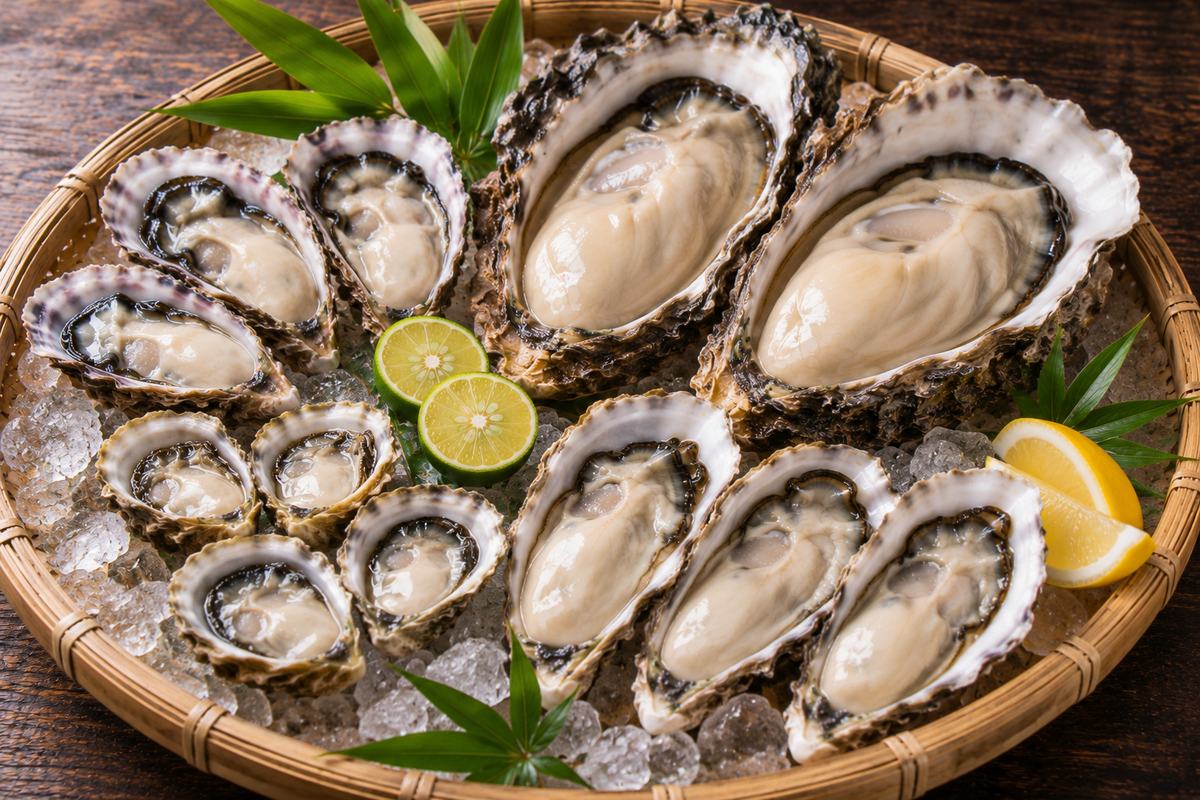
Japanese oysters come in many brands, shaped by where and how they are grown. In 2024 a national competition, the Zenkoku Kaki-1 (Kaki-wan) Grand Prix, began, putting branded oysters even more in the spotlight. At the same time, raw oysters carry a risk of food poisoning, and eating too many can mean taking in too much zinc and purine. Here is what is worth knowing to enjoy them well and safely.
Our previous column, 'When are Japanese oysters in season?', explains the seasons, the difference between Pacific and rock oysters, and what raw and cooking grade mean.
Why Japan has so many oyster brands
An oyster's size and taste depend on the water it grows in: temperature, salinity and the amount of plankton it feeds on. Even among Pacific oysters, those from inner bays fed by rivers tend to be sweeter, while those from waters closer to the open sea tend to taste cleaner and more briny.
Growing methods add to the differences: hanging from rafts or growing one by one in baskets, how many years they are grown, and how they are purified. Brands are how growing areas put these differences forward under their own names.
Main Pacific oyster brands
Here are a few well-known examples; there are many more across Japan.
- Hiroshima, Kaki Komachi: a triploid oyster developed by Hiroshima Prefecture. It does not spawn, so it stays plump all year
- Okayama, Hinase oysters: from Hinase in Bizen City. Known for growing large in a single year, and for kaki-oko, okonomiyaki pancakes filled with oysters
- Hyogo, Murotsu and Sakoshi oysters: one-year oysters from the Harima Sea. Large and well known for grilling
- Miyagi, Tokurakko oysters: from Tokura in Minamisanriku. In 2016 they became the first in Japan to earn ASC certification for responsible aquaculture
- Hokkaido, Kaki-emon: from Akkeshi. Grown as single seed, ideal for serving raw in the shell
- Mie, Matoya oysters: from Matoya Bay in Shima City. A pioneer of raw-grade oysters, adopting purification in UV-sterilised seawater early on
Main rock oyster brands
- Shimane, Haruka: farmed rock oysters from Ama on the Oki Islands, shipped from spring to early summer
- Tottori, Natsuki: wild rock oysters from Tottori Prefecture that meet size and other standards
- Akita, Kisakata rock oysters: wild rock oysters from Kisakata in Nikaho City, gathered one by one by divers
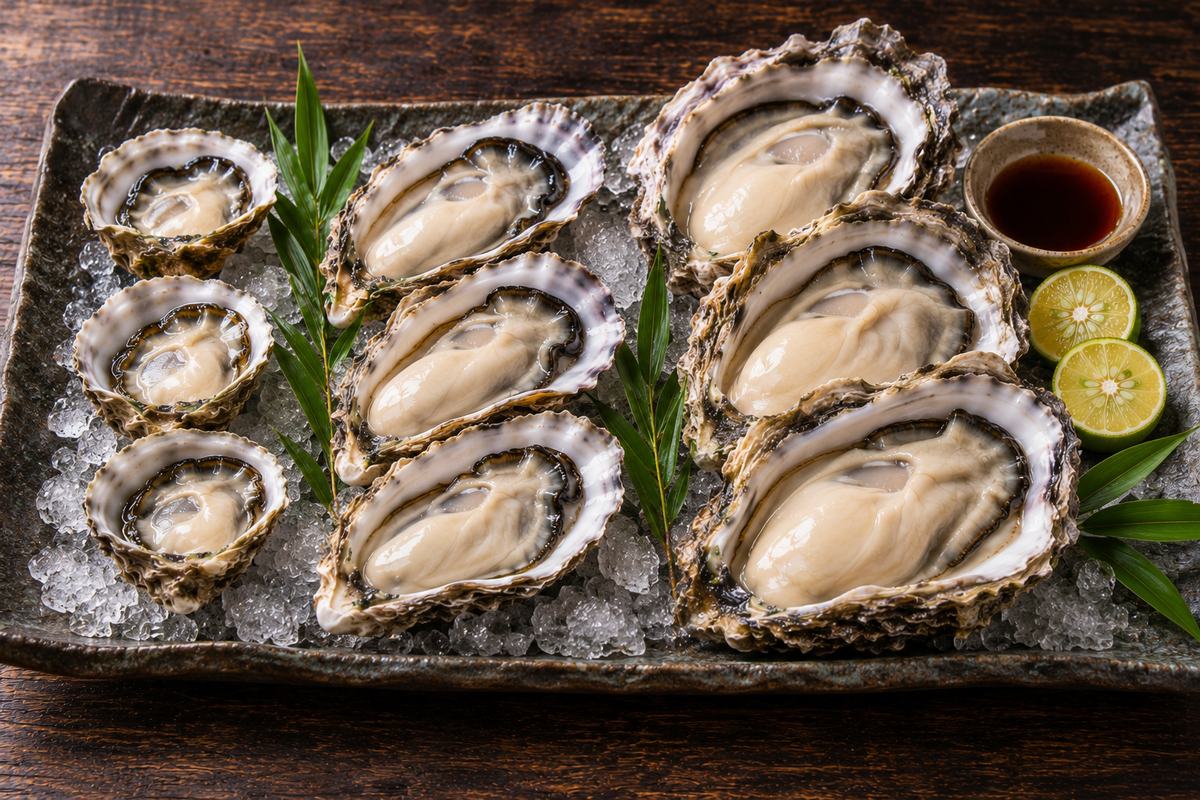
Brand standards (size, shipping season, testing and so on) are set by each area and may be revised from year to year. When buying, it is best to confirm that year's standards with the producers.
What is the Kaki-1 Grand Prix?
The Zenkoku Kaki-1 Grand Prix is a competition of Japanese oysters judged on taste, organised by the Japan Oyster Farmers Association (Zenkoku Kaki Kyōgikai). The first was held in February 2024 at Toyosu Market in Tokyo.
Judges from seafood wholesale and the restaurant trade taste the oysters blind, without knowing where they come from. The first event had raw and cooked categories: the raw category was won by an oyster from the Harima Sea in Himeji, Hyogo, and the cooked category by 'Okayama kaki' from Hinase in Bizen, Okayama.
It has been held every year since. In 2026 it took place at Toyosu Market on 27 and 28 February, with 11 categories by growing method (such as single seed) and preparation. Winning oysters are increasingly introduced together with the name of their growing area, which helps the brands become known.
Food poisoning from raw oysters: norovirus, Vibrio parahaemolyticus and shellfish toxins
Oysters draw in large amounts of seawater and feed on the plankton in it, so they can also accumulate viruses and bacteria from the water. Three main causes of food poisoning are worth knowing when eating them raw.
- Norovirus: most common in winter. Nausea, vomiting, severe diarrhoea and stomach pain appear 1–2 days after eating. Raw-grade oysters cannot rule it out completely
- Vibrio parahaemolyticus: a bacterium that thrives in warm summer seawater. Keeping summer rock oysters cold is essential when eating them raw
- Shellfish toxins: toxins from harmful plankton the oyster has eaten. Cooking does not destroy them. Shipments are stopped from waters where toxin levels exceed the limit
Oysters on the market have passed shellfish toxin testing and, if sold for eating raw, the raw-grade standards. Even so, norovirus cannot be brought to zero in raw-grade oysters. Eating oysters raw is never completely risk-free, and it is important to know that.
How to eat oysters safely
- Eat raw only oysters labelled for raw consumption. Always cook oysters labelled for cooking
- Keep to the use-by date and store at 10°C or below (ideally 5°C or below)
- To inactivate norovirus, cook until the centre reaches 85–90°C for at least 90 seconds
- If you are unwell, elderly, a young child or pregnant, avoid raw oysters and eat them cooked
- Do not use hands, chopping boards or knives that touched raw oysters for other food
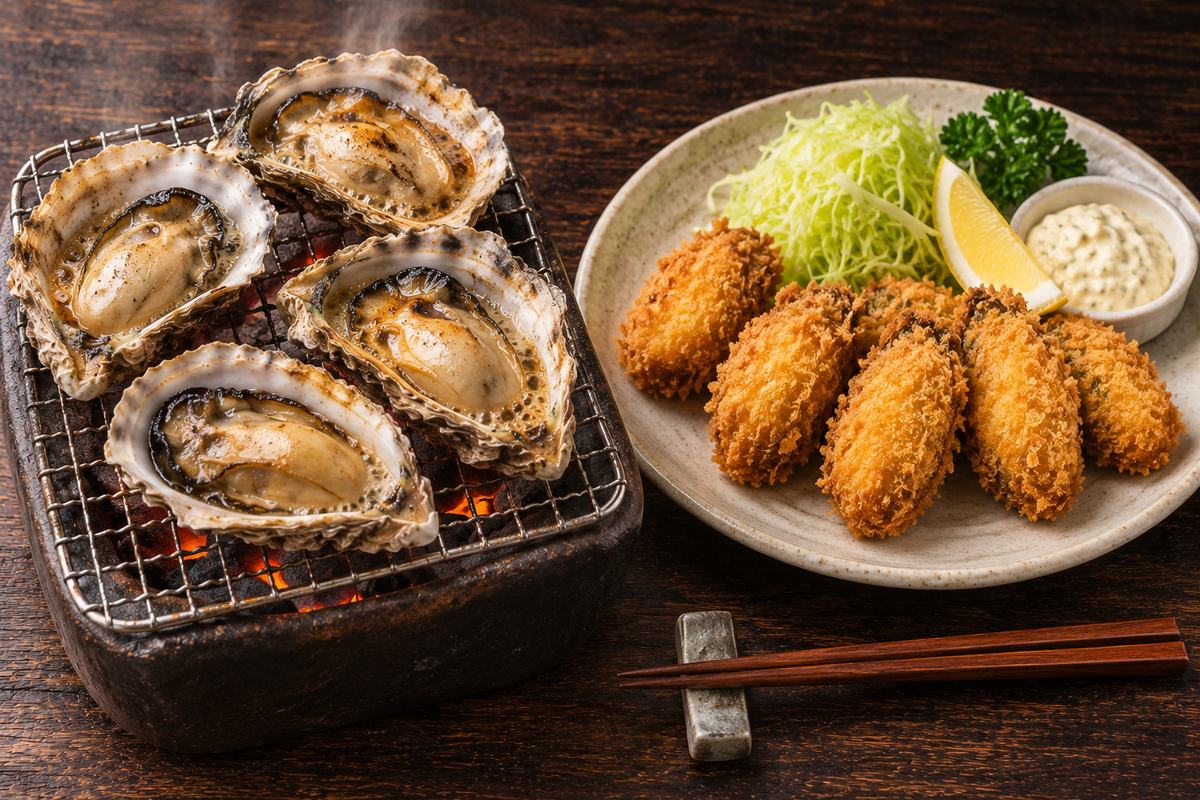
There are many cooked oyster dishes: fried oysters, hot pots, grilled oysters, miso-lined dote-nabe and oyster rice. Oysters for cooking are often large and stay delicious when cooked.
Do not overdo it: zinc and purine
Oysters are highly nutritious, but eating a lot at once can mean taking in too much zinc or purine.
Zinc: according to Japan's Standard Tables of Food Composition (2020 edition), raw farmed oysters contain 14.0 mg of zinc per 100 g, far more than most foods. One shucked oyster (about 15 g) has about 2.1 mg. Japan's Ministry of Health, Labour and Welfare's Dietary Reference Intakes (2025 edition) set the recommended daily amount at 9.0–9.5 mg for adult men and 7.0–8.0 mg for women, and the tolerable upper limit at 40–45 mg for men and 35 mg for women. On paper, around 20 shucked oysters reach the upper limit. Too much zinc can interfere with copper absorption and may lead to anaemia. People taking zinc supplements should be especially careful.
Purine: the body turns purine into uric acid, and too much raises uric acid levels and can cause gout. According to the Gout and Uric Acid Foundation of Japan, oysters contain 184.5 mg of purine per 100 g, high among seafood, or about 28 mg per shucked oyster. Japanese clinical guidelines for gout and hyperuricaemia recommend keeping dietary purine to around 400 mg a day. People with high uric acid levels should watch how many they eat at once.
A single oyster dish as part of a normal meal is nothing to worry about. It is only worth keeping in mind at all-you-can-eat events or when eating large amounts several days in a row.
Comparing oysters from different areas is one of the pleasures of the season. Washokuzai Calendar's pages for Pacific and rock oysters show when each is in season and available, how to choose them and how to store them.
Ingredients mentioned here
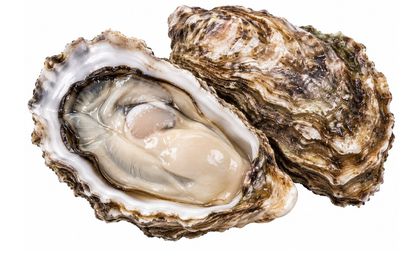 Pacific oysterNov–Feb
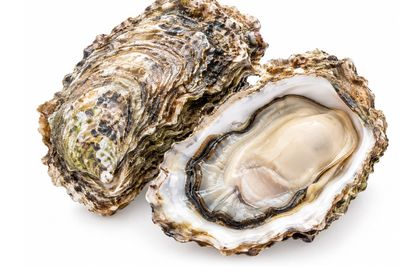 Rock oysterJun–Aug
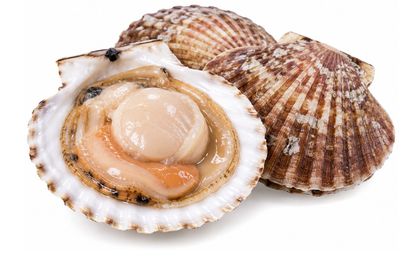 ScallopDec–Mar
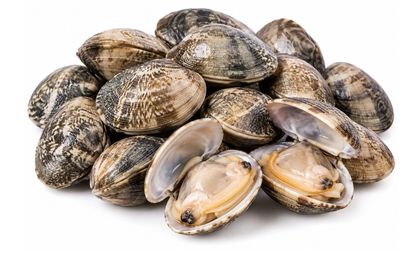 Manila clamFeb–Apr
 Hard clamFeb–Apr
 LemonNov–Feb