2026-11-04
When are Japanese apples in season? Varieties, bagged vs unbagged, and CA storage
Japanese apples are in season from October to December. Harvest starts with Tsugaru in September, and the leading variety, Fuji, is picked in November. Thanks to CA storage, shipments continue until the following summer. This guide covers varieties, bagged and unbagged growing, honey cores, storage, choosing apples and export quarantine for people in the trade.
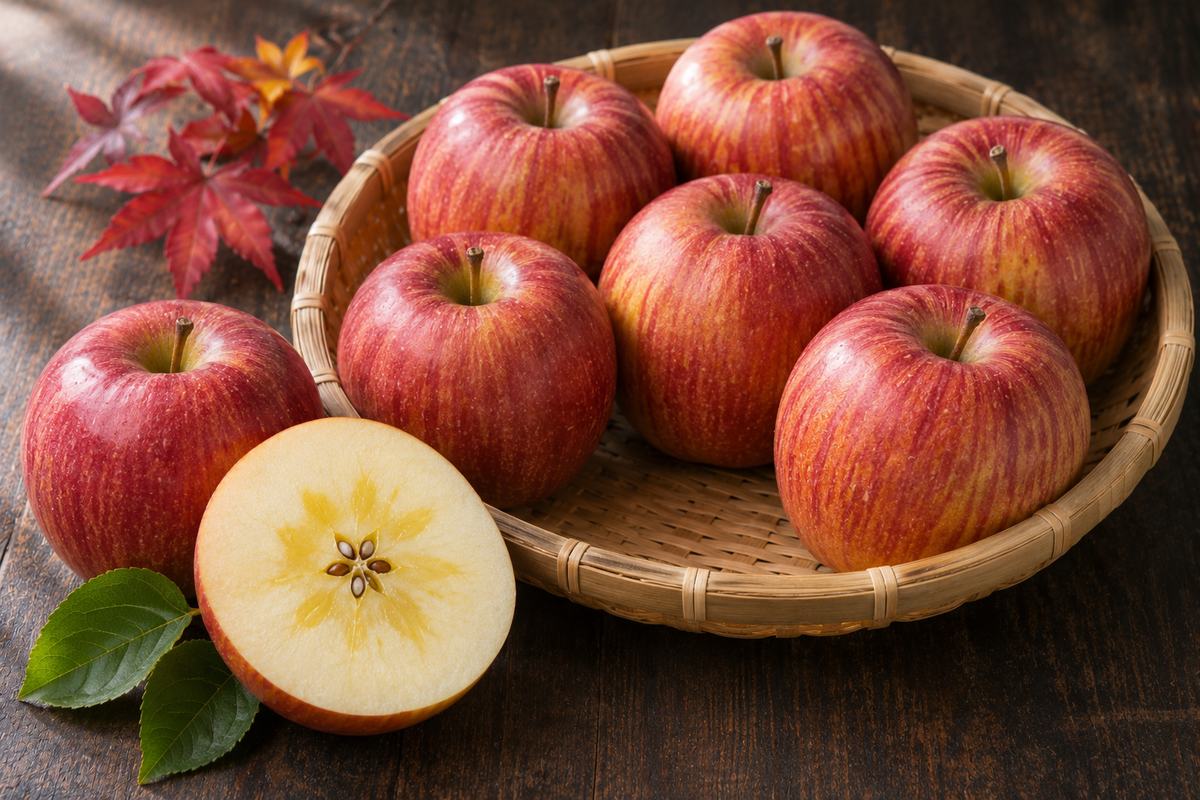
Apples are Japan's largest fruit export. In 2025 apple exports were worth 14.37 billion yen, about twice the value of strawberries (6.74 billion yen), and more than 70% went to Taiwan. Exports are also subject to strict quarantine rules, and a single oversight can halt exports from a whole region. This guide covers the season, varieties, growing and storage, and the export rules.
When are apples in season? October to December
Harvest begins with early varieties in late August, followed by Tsugaru in September, Jonathan (Kogyoku) and Shinano Sweet in October, and Orin and Fuji in November. November and December, when the high-volume Fuji crop is in, are the peak of the apple season.
Apples keep being shipped long after harvest. From New Year to spring, most come from ordinary cold storage; from April, from CA storage, and they stay on shelves until around the following summer. Our calendar marks the freshly harvested months as the season.
Growing regions and varieties: Aomori grows 60%, Fuji is half
According to the Ministry of Agriculture, Forestry and Fisheries, Japan harvested 577,000 tonnes of apples in 2025, 5% less than the year before. Aomori grew 351,000 tonnes (61%), Nagano 106,000 tonnes (18%) and Iwate 31,000 tonnes (5%).
Fuji dominates. In Aomori, about half the harvest is Fuji, with Orin, Tsugaru and Jonagold each making up about a tenth (2020 crop).
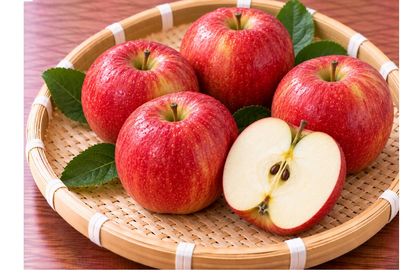
- Fuji: a good balance of sweetness and acidity, and very juicy. Keeps well; the mainstay for both the domestic market and export
- Tsugaru: the leading early variety, in September. Low in acid and soft. Shorter shelf life
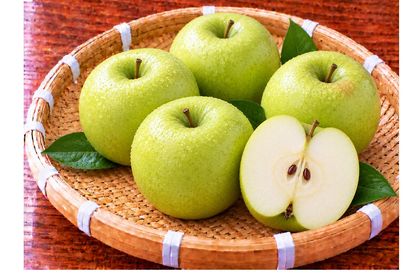
- Orin: a yellow-green apple. Strongly aromatic and low in acid
- Jonagold: fairly tart, good for eating fresh and for baking
- Jonathan (Kogyoku): small and tart. A classic for apple pie and processing
Bagged and unbagged: 'Sun Fuji' is grown without bags
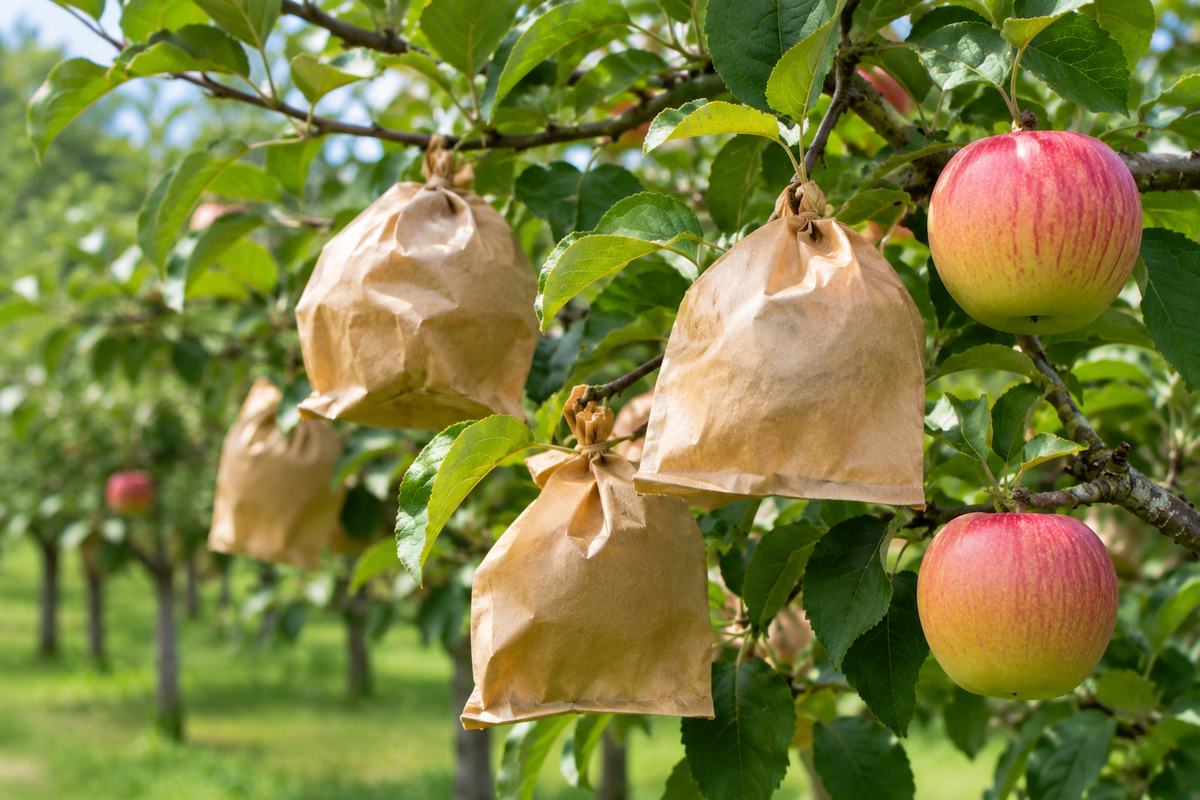
Japanese apples are grown either bagged (yutai), with a paper bag over each fruit, or unbagged (mutai). Fuji grown without bags in full sun is called Sun Fuji; it is sweeter and develops honey cores more easily.
Bagged Fuji have their bags removed before harvest so the fruit can colour, which gives an even, attractive finish and better storage life. The CA-stored Fuji shipped from spring onwards are mostly bagged fruit. But bagging is labour-intensive and declining: in Aomori, the share of Fuji grown bagged fell to 26% in 2020. Bagged Fuji for spring and summer is becoming scarce, and it increasingly competes with rising imports of New Zealand apples.
Honey-core apples: a sign of sweetness, but not for long storage
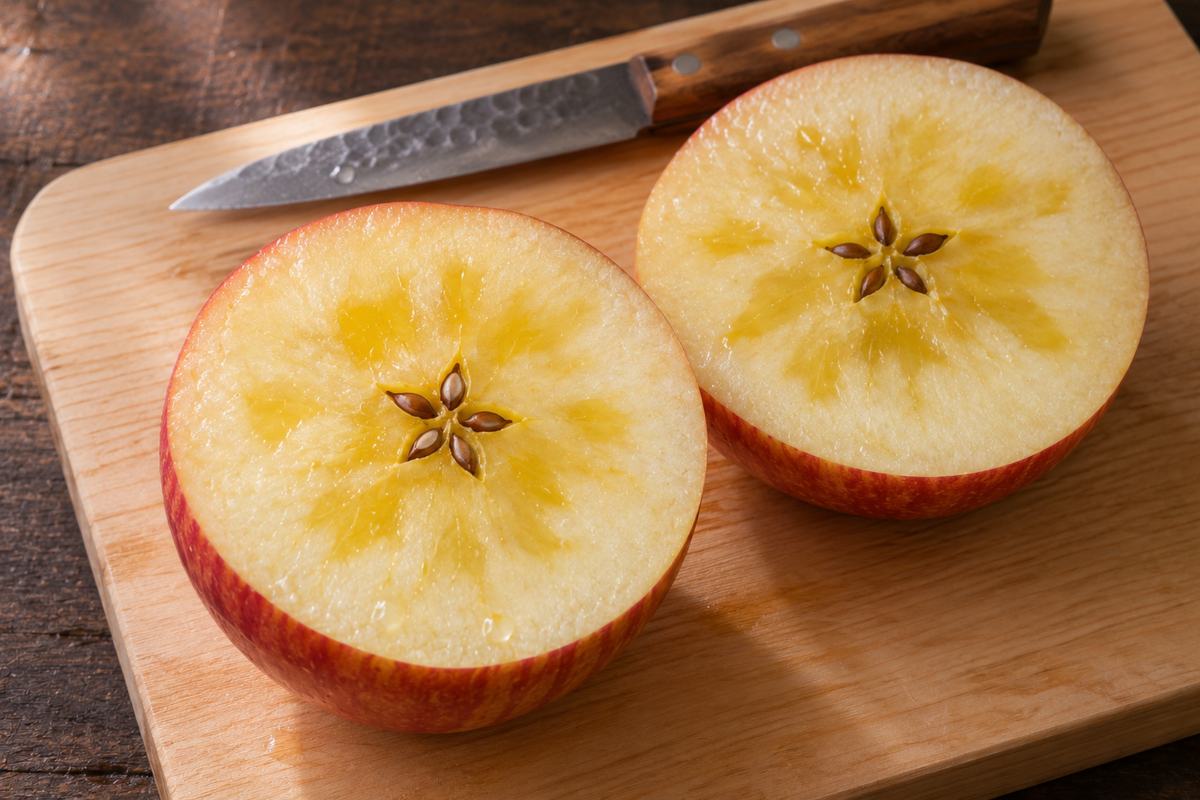
The translucent area around the core of a cut apple is called mitsu, or honey. It is sorbitol, a sugar made in the leaves, that has built up in the flesh without being used, and it is a sign of a fully ripe apple. The honey itself is not especially sweet, but apples ripe enough to have it taste sweeter overall.
Apples with a lot of honey are, however, prone to internal browning of the honey area if kept long. Honey-core apples are normally sold through the year end and early New Year, not put into long storage. Even in CA storage, Fuji from a heavy-honey year are handled differently, for example with a lower carbon dioxide setting.
CA storage: putting apples to sleep by changing the air
Controlled atmosphere (CA) storage slows the apples' respiration by changing the composition of the air in a cold store. According to Shigeru Ichiki, former director of the Aomori Apple Experiment Station, typical settings are oxygen reduced to 1.8 to 2.5% and carbon dioxide raised to 1.5 to 2.5% (normal air is about 21% oxygen).
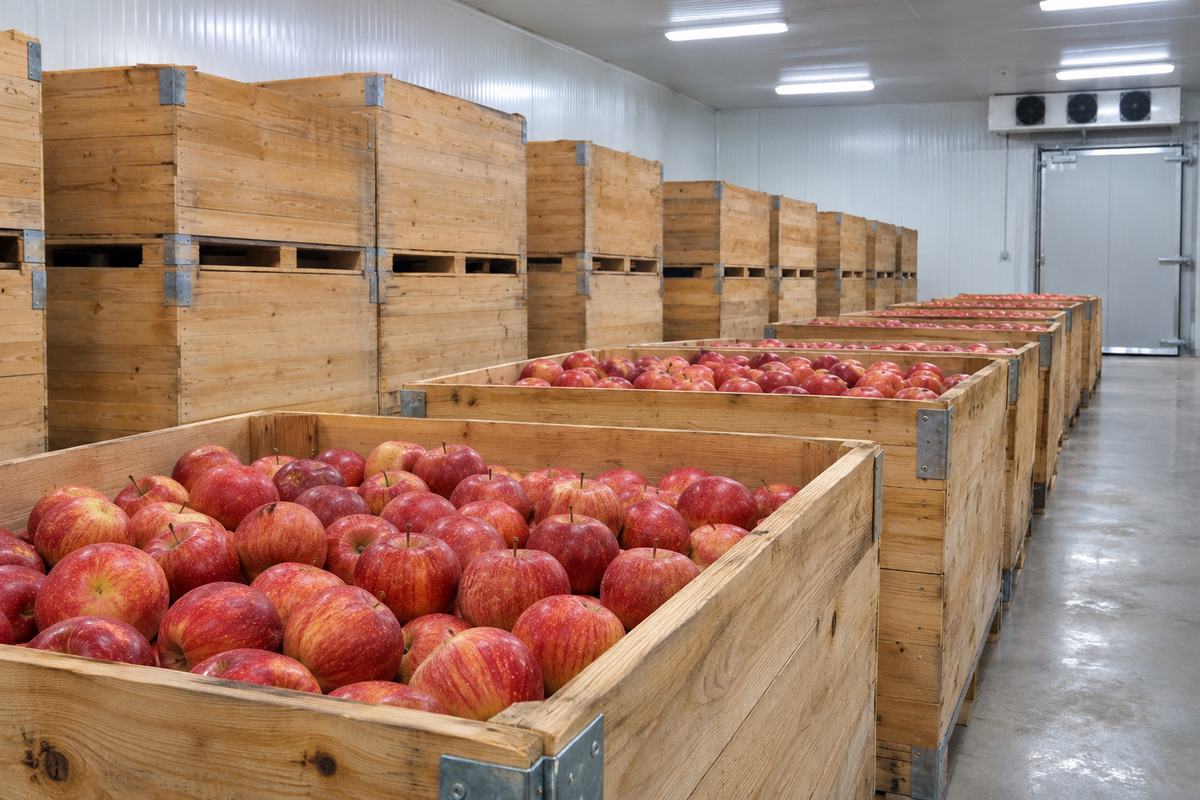
Compared with ordinary cold storage, CA keeps the flesh firm and the acidity intact, and the apples last longer after leaving storage. More than 90% of Aomori's bagged Fuji shipped outside the prefecture went out between April and August (2019 crop).
CA apples start respiring again once they leave storage, so keep them cold afterwards and do not leave them at room temperature for long.
How to choose a good apple
- Heavy for its size, with firm, taut skin
- A thick stem that has not shrivelled
- Colour reaching right into the hollow at the base. In Fuji, a background colour that has turned from green to yellow under the red is a sign of ripeness
- A slightly sticky surface is a natural substance from ripe apples, not wax
- Apples that feel soft or sound dull when tapped have gone mealy
Notes from the export side
According to the Ministry of Agriculture, Forestry and Fisheries, Japan exported 24,017 tonnes of apples worth 14.37 billion yen in 2025. Taiwan took 10.53 billion yen (73.3%) and Hong Kong 3.12 billion yen (21.7%), together about 95%. Exports fell 28.6% from 20.1 billion yen the year before; apple exports swing widely from year to year.
In Asia, large, well-coloured apples tend to be favoured as gifts, and demand peaks before Lunar New Year.
Exports to Taiwan are subject to strict quarantine rules. According to Aomori Prefecture's procedure guide, the target pests include the peach fruit moth and thrips, and the conditions include:
- Registering the orchards and the packing houses every year
- Packing only apples from registered orchards, and keeping spray records
- Setting sticky traps in the packing house and keeping monitoring records
- If peach fruit moth is found at export inspection, exports from that packing house and orchard stop. If it is found at Taiwan's import inspection, all exports of every product from that prefecture stop, and a second find extends this to every product from Japan
A single packing house's oversight can halt exports from a whole region, or even the whole country. Before signing a contract, check that the supplier's packing house is registered and that its spray and sorting records are in order. Compliance with Taiwan's pesticide residue limits must be checked too.