2026-11-12
When are Japanese oysters in season? Pacific vs rock oysters, triploids, raw vs cooking grade
Pacific oysters are in season from November to February, rock oysters from June to August. Here is how the two differ, why triploid oysters stay plump in summer, what 'for raw' and 'for cooking' really mean, where Japan's oysters come from and how to judge quality.
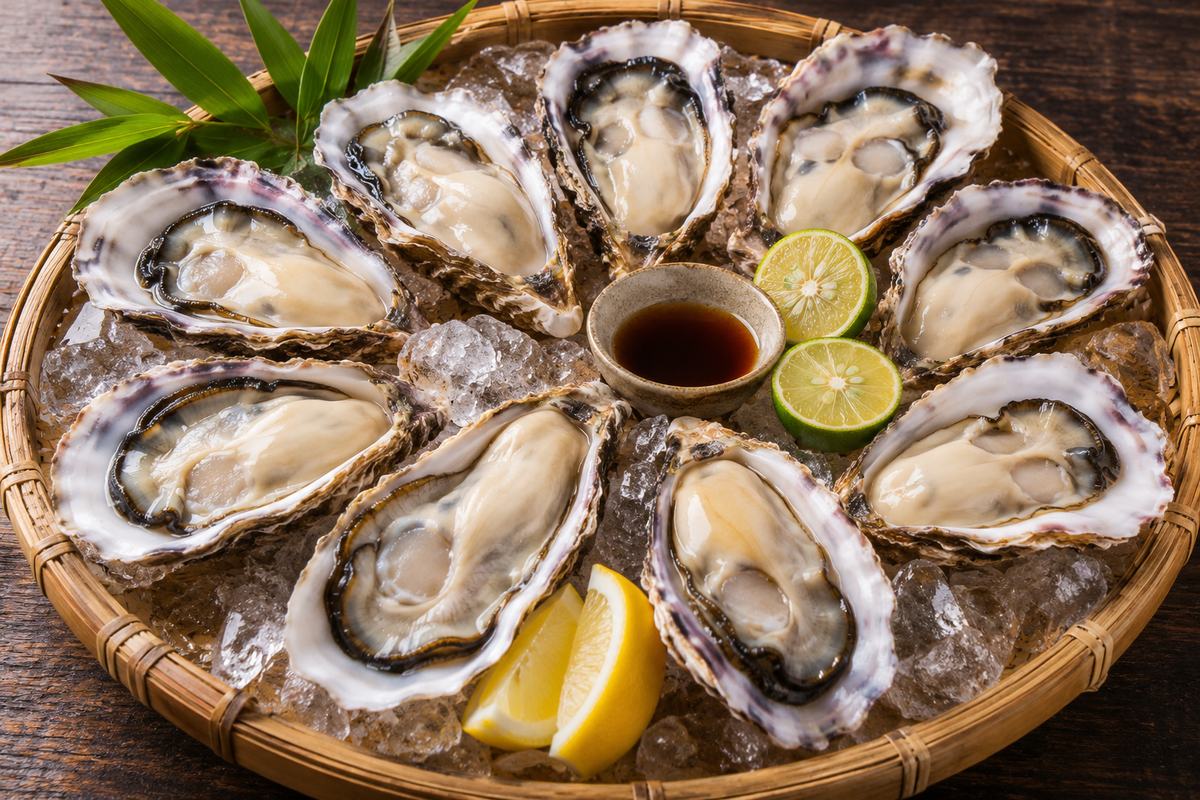
When oysters are in season in Japan depends on the species, and the two main ones are opposites. The Pacific oyster (magaki), which makes up most of Japan's oysters, is at its best from November to February and gets plumper as the water gets colder. The rock oyster (iwagaki) is a summer oyster, at its best from June to August. Pacific oysters in winter, rock oysters in summer: with the two, oysters can be enjoyed all year.
When are oysters in season? Pacific oysters in winter, rock oysters in summer
Pacific oysters spawn in summer. Spawning uses up their reserves and leaves the meat thin and watery; through autumn and winter they rebuild, storing glycogen and filling out. The old European rule of not eating oysters in months without an R (May to August) matches the Pacific oyster's spawning season.
Shipments usually start around October and continue until about March. Washokuzai Calendar shows November to February, when the meat is fullest, as the season.
Rock oysters spawn little by little over a long period from summer into autumn. Because they never lose condition all at once, they are at their best in summer, when Pacific oysters are off the market.
Pacific oysters and rock oysters compared
- Season: Pacific oysters in winter (Nov–Feb), rock oysters in summer (Jun–Aug)
- Time to grow: Pacific oysters 1–2 years, rock oysters about 3–5 years
- Size: rock oysters have thick, large shells, some over 15 cm long
- Main areas: Pacific oysters are farmed mainly in Hiroshima, Miyagi and Okayama; rock oysters come wild and farmed from the Sea of Japan coast (Shimane, Tottori, Ishikawa, Niigata, Akita and others)
- Taste: Pacific oysters are juicy and sweet; rock oysters are thick, rich and creamy
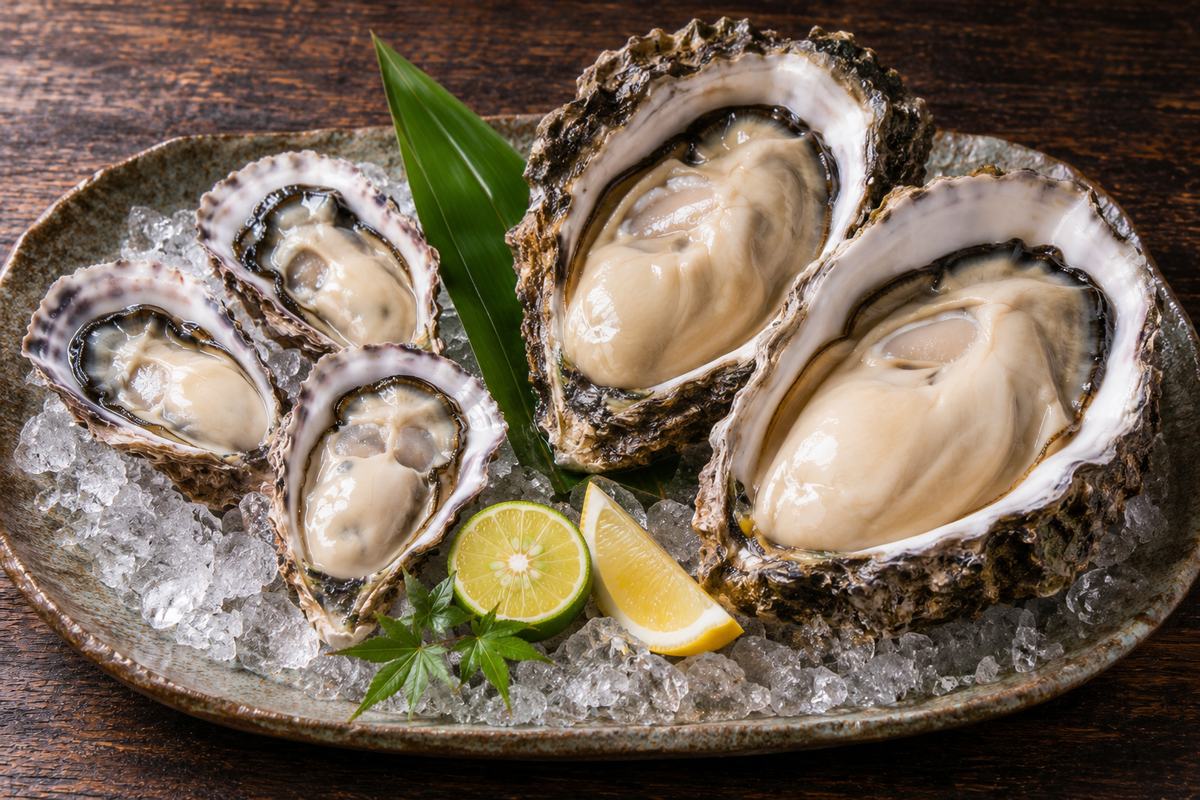
Rock oysters take years to grow, and wild ones are gathered one by one by divers, so each costs more than a Pacific oyster. Restaurants usually serve them raw on the half shell as a summer highlight.
Triploid oysters: no spawning, so no summer thinning
More and more triploid Pacific oysters are now grown so that Pacific oysters can be offered in summer too.
Normal oysters are diploid, with two sets of chromosomes. Triploid oysters are bred to have three, and as a result their reproductive organs hardly develop. Since they do not spawn, the energy goes into the meat, and they stay plump through summer. This is a breeding technique, not genetic modification.
A well-known example is Kaki Komachi, a triploid oyster developed by Hiroshima Prefecture's fisheries and marine technology centre. It stays full all year and is shipped as a large oyster even in summer. In hot years, oysters that keep spawning can weaken and die, and triploids are also used to reduce those losses.
Raw grade and cooking grade: decided by the water, not by freshness
In Japan, oysters are sold as either 'for raw consumption' (namashoku-yō) or 'for cooking' (kanetsu-yō). The difference is not freshness. It depends on where they were harvested.
Only oysters from clean waters designated by the prefecture, or oysters purified for a set time in sterilised seawater (for example, UV-treated), can be sold for eating raw. They must also meet the standards of Japan's Food Sanitation Act, such as no more than 50,000 bacteria per gram and no more than 230 E. coli per 100 g.
Oysters for cooking are grown outside those designated waters. Because they often grow closer to shore in nutrient-rich water, many are large and full-flavoured, and plenty of chefs prefer them for fried oysters or hot pots.
Labels must show whether oysters are for raw consumption or for cooking, and the harvest area. Oysters for cooking should never be eaten raw, and even raw-grade oysters are safer cooked for anyone who is unwell, elderly or a young child.
Where Japan's oysters come from: Hiroshima produces 60%
According to Japan's Fisheries Agency, farmed oyster production in 2023 was about 149,000 tonnes, down from a peak of about 270,000 tonnes in 1988.
Hiroshima Prefecture alone produces 61%, followed by Miyagi (14%), Okayama (8%), Hyogo (5%) and Iwate (4%). The Seto Inland Sea and the Sanriku coast are Japan's two great oyster regions.
How Japanese oysters are farmed: rafts, longlines and single seed
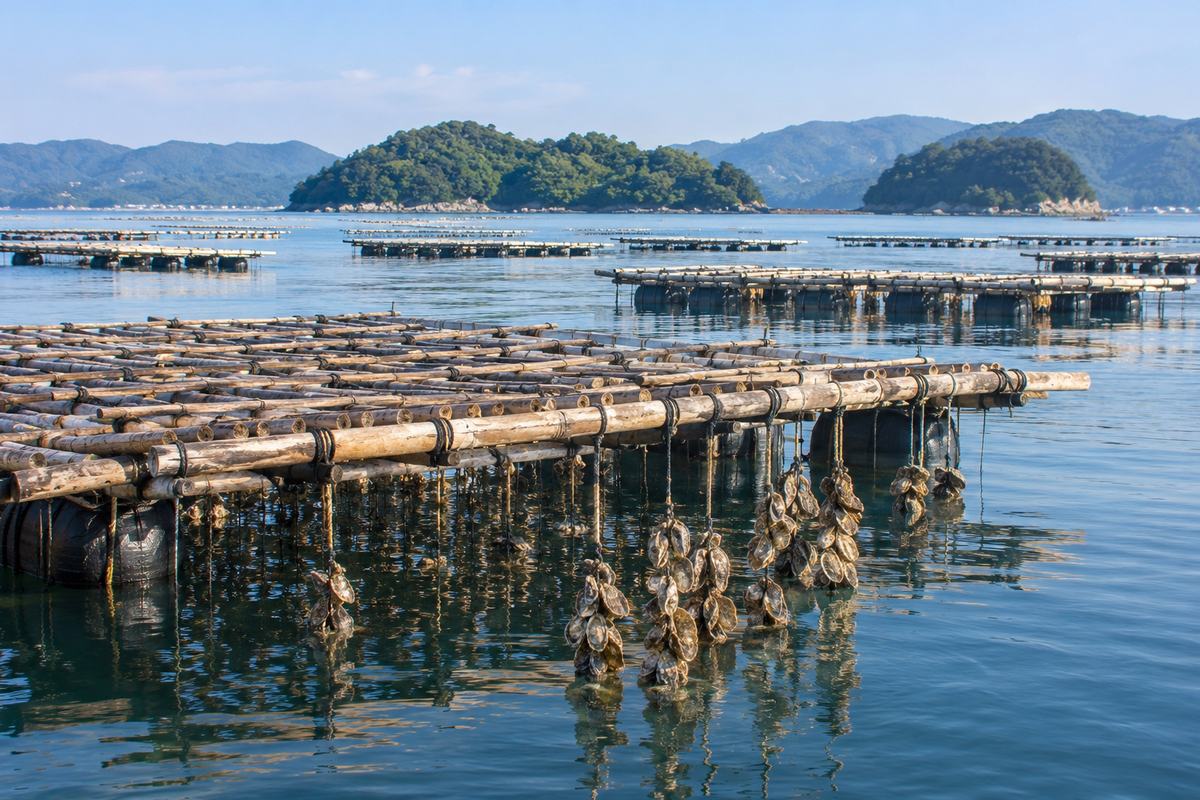
Most Japanese oysters start as young oysters (spat) attached to scallop shells, which are hung on ropes in the sea. How they are hung depends on the water.
- Rafts: ropes hang from rafts made of bamboo and other materials in calm inner bays. Common in the Seto Inland Sea, including Hiroshima
- Longlines: ropes hang from lines held up by floats. They stand up to waves and are common on the Sanriku coast (Miyagi, Iwate)
- Single seed: spat are separated and grown one by one in baskets. Shape and size are even, which suits oysters served raw in the shell
Single-seed oysters suit oysters sold whole in the shell, for example for oyster bars, and more areas across Japan are now producing them.
Judging quality: in the shell and shucked
The points below are general guidelines; they vary by area and season.
- In the shell: heavy for its size, tightly closed, well rounded, with no broken edges
- Shucked: plump and thick, milky white and glossy, with a clearly defined dark edge on the frilled mantle
- Liquid: the liquid in the pack should not be cloudy; avoid shrunken meat sitting in a lot of liquid
- Labels: always check raw or cooking grade, harvest area and use-by date
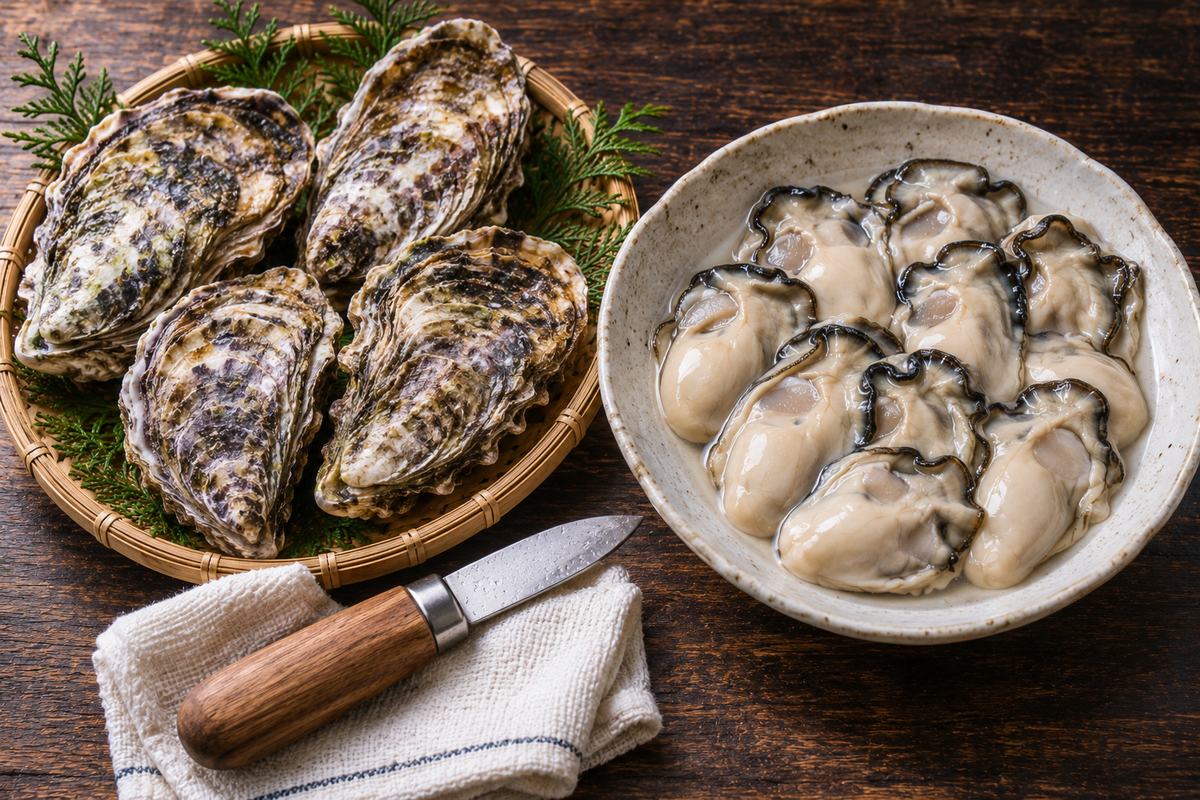
Shucked oysters do not keep long, and raw-grade ones have especially short use-by dates. Keep them at 10°C or below (ideally 5°C or below) and use them quickly.
Does freezing make oysters taste better?
There is a popular claim in Japan that freezing oysters increases their amino acids and makes them taste more savoury. The idea is that freezing breaks the cells, and the oyster's own enzymes then break down proteins, releasing more of the amino acids behind umami.
Among shellfish, research by the Aomori Prefectural Industrial Technology Research Center has confirmed that freezing shijimi clams increases ornithine, a type of amino acid. For oysters, however, we could not find any public research confirming that freezing increases their umami compounds. For oysters, it is best treated as a claim rather than an established fact.
Freezing also has a downside: thawed oysters release liquid (drip) and tend to become softer. Oysters frozen at home should be cooked. Freezing does not destroy norovirus, so only oysters frozen and sold as raw grade should be eaten raw.
From an exporter's point of view
According to the Fisheries Agency, Japan's oyster exports grew from about 10,000 tonnes in 2019 to about 18,000 tonnes in 2023 (in-shell weight). Main destinations are Taiwan, Hong Kong, Singapore and other Asian markets, mostly frozen oysters, and the United States and others, mostly processed products.
When exporting raw-grade oysters, sanitary requirements and the treatment of harvest areas differ by country. An oyster that can be sold raw in Japan cannot necessarily be exported as raw grade. Always confirm the importing country's conditions before trading.
In recent years, rising sea temperatures have also caused poor growth and die-offs in many areas, and yields can change greatly from year to year. It is safer to discuss volumes and timing with producers early.
Our next column covers Japan's oyster brands, the national oyster competition (Zenkoku Kaki-1 Grand Prix), and what to know about food poisoning and eating too many.
Ingredients mentioned here
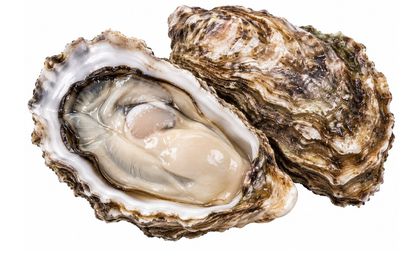 Pacific oysterNov–Feb
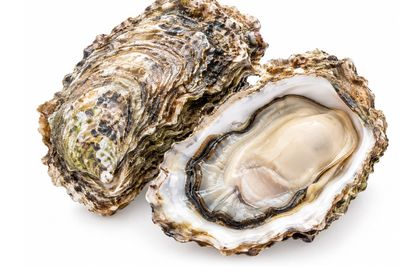 Rock oysterJun–Aug
 LemonNov–Feb
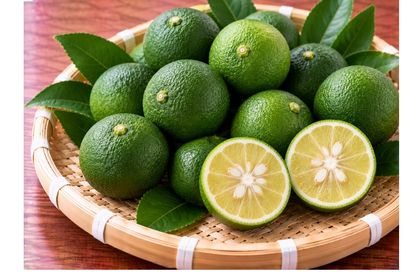 SudachiAug–Oct
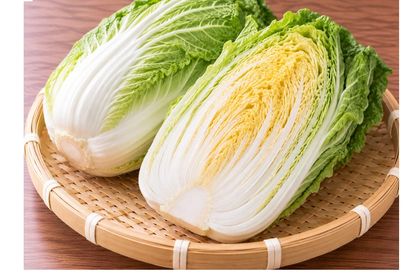 Napa cabbageNov–Feb
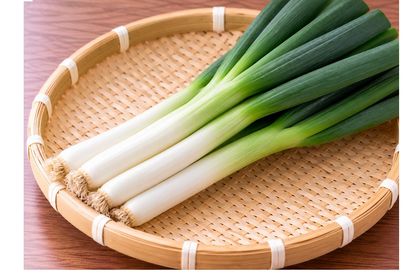 Naganegi leekNov–Feb